Infrastructure
The infrastructure behind autonomous mobility
Autonomous vehicles are only part of the picture. Deploying them at scale requires charging, energy, operations and passenger infrastructure — the physical and operational layer that Autonomous Mobility UK is being built to create.
Mobility Hubs
A new kind of transport infrastructure
A mobility hub brings together everything an autonomous fleet needs in one well-designed location: charging, energy storage, fleet operations and a safe, accessible passenger environment — connected to the surrounding transport network.
Designed as credible, buildable British infrastructure, hubs are the foundation on which local autonomous services can grow into connected regional networks.
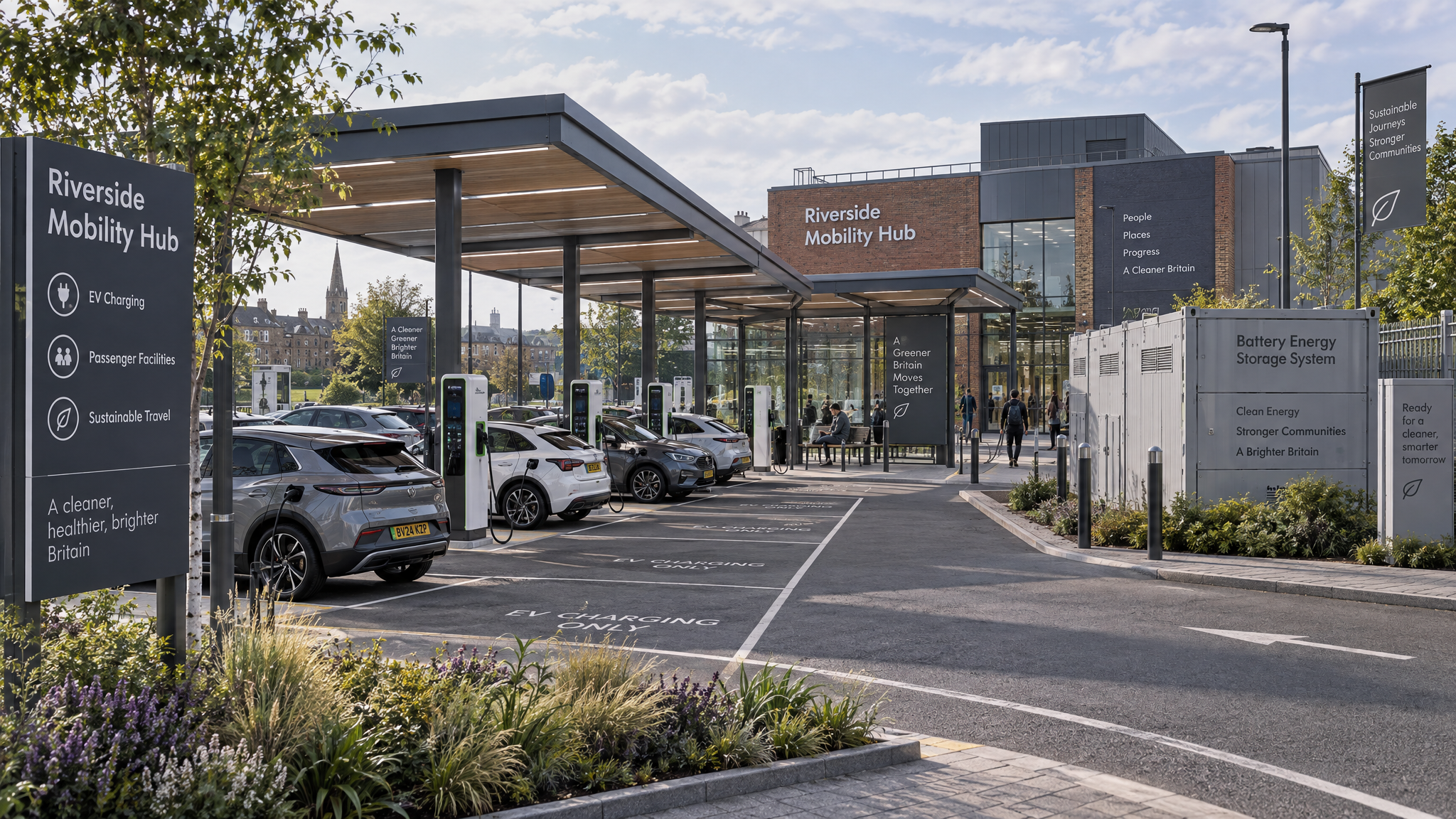
Shared infrastructure designed for today’s autonomous ground mobility and adaptable for future transport technologies. Concept visualisation only.
The Building Blocks
Four foundations of autonomous mobility
Together, these form the deployment and infrastructure layer required to put authorised autonomous vehicles into safe, commercial passenger service.
Mobility Hubs
Purpose-designed sites where autonomous fleets are charged, cleaned, managed and connected to passengers and other transport.
- Covered charging and vehicle staging bays
- Passenger pick-up, drop-off and waiting areas
- Fleet cleaning, inspection and light maintenance
- Operations and remote-monitoring facilities
- Accessible, well-lit and secure environments
Energy Infrastructure
Reliable, cost-effective charging is fundamental to a commercially viable electric autonomous fleet.
- High-capacity depot and hub charging
- Battery energy storage systems (BESS) to manage demand
- Grid connection planning and load management
- Potential on-site and renewable generation
- Smart charging aligned to fleet duty cycles
Fleet Operations
The operational capability required to run a safe, reliable autonomous passenger service day to day.
- Continuous fleet monitoring and dispatch
- Remote assistance and oversight
- Servicing, cleaning and readiness cycles
- Performance, safety and utilisation data
- Local operating-domain management
Passenger Interchange
Autonomous mobility works best when it connects seamlessly with the wider transport network.
- Connections with rail and bus services
- Walking and cycling links
- Integration with taxi and private hire
- First-and-last-mile journey design
- Adaptable for future Advanced Air Mobility
Build Once. Design to Adapt.
Infrastructure is the long-term advantage
The land, power, charging and passenger facilities that support autonomous road vehicles today are substantial, long-life assets. Designed well, the same locations can evolve as transport technology advances.
Selected, appropriately located sites could potentially support future Advanced Air Mobility, subject to aviation, planning and safety requirements — without rebuilding the underlying infrastructure.
Build infrastructure once.
Design it to adapt.
Autonomous Road Vehicles
Today’s core focus
Mobility Hub
Future Advanced Air Mobility
Potential future extension only
Infrastructure, energy and land partners
We are engaging with energy providers, charging specialists, landowners and infrastructure investors interested in the physical foundations of autonomous mobility in the UK.
Talk to AMUK